
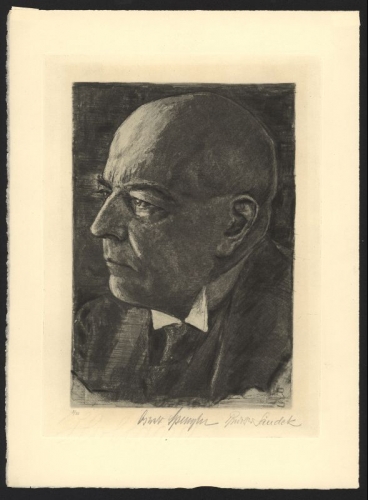
Oswald Spengler is by now well-known as one of the major thinkers of the German Conservative Revolution of the early 20th Century. In fact, he is frequently cited as having been one of the most determining intellectual influences on German Conservatism of the interwar period – along with Arthur Moeller van den Bruck and Ernst Jünger – to the point where his cultural pessimist philosophy is seen to be representative of Revolutionary Conservative views in general (although in reality most Revolutionary Conservatives held more optimistic views).[1]
To begin our discussion, we shall provide a brief overview of the major themes of Oswald Spengler’s philosophy.[2] According to Spengler, every High Culture has its own “soul” (this refers to the essential character of a Culture) and goes through predictable cycles of birth, growth, fulfillment, decline, and demise which resemble that of the life of a plant. To quote Spengler:
A Culture is born in the moment when a great soul awakens out of the proto-spirituality of ever-childish humanity, and detaches itself, a form from the formless, a bounded and mortal thing from the boundless and enduring. It blooms on the soil of an exactly-definable landscape, to which plant-wise it remains bound. It dies when the soul has actualized the full sum of its possibilities in the shape of peoples, languages, dogmas, arts, states, sciences, and reverts into the proto-soul.[3]
There is an important distinction in this theory between Kultur (“Culture”) and Zivilisation (“Civilization”). Kultur refers to the beginning phase of a High Culture which is marked by rural life, religiosity, vitality, will-to-power, and ascendant instincts, while Zivilisation refers to the later phase which is marked by urbanization, irreligion, purely rational intellect, mechanized life, and decadence. Although he acknowledged other High Cultures, Spengler focused particularly on three High Cultures which he distinguished and made comparisons between: the Magian, the Classical (Greco-Roman), and the present Western High Culture. He held the view that the West, which was in its later Zivilisation phase, would soon enter a final imperialistic and “Caesarist” stage – a stage which, according to Spengler, marks the final flash before the end of a High Culture.[4]
Perhaps Spengler’s most important contribution to the Conservative Revolution, however, was his theory of “Prussian Socialism,” which formed the basis of his view that conservatives and socialists should unite. In his work he argued that the Prussian character, which was the German character par excellence, was essentially socialist. For Spengler, true socialism was primarily a matter of ethics rather than economics. This ethical, Prussian socialism meant the development and practice of work ethic, discipline, obedience, a sense of duty to the greater good and the state, self-sacrifice, and the possibility of attaining any rank by talent. Prussian socialism was differentiated from Marxism and liberalism. Marxism was not true socialism because it was materialistic and based on class conflict, which stood in contrast with the Prussian ethics of the state. Also in contrast to Prussian socialism was liberalism and capitalism, which negated the idea of duty, practiced a “piracy principle,” and created the rule of money.[5]
Oswald Spengler’s theories of predictable culture cycles, of the separation between Kultur and Zivilisation, of the Western High Culture as being in a state of decline, and of a non-Marxist form of socialism, have all received a great deal of attention in early 20th Century Germany, and there is no doubt that they had influenced Right-wing thought at the time. However, it is often forgotten just how divergent the views of many Revolutionary Conservatives were from Spengler’s, even if they did study and draw from his theories, just as an overemphasis on Spenglerian theory in the Conservative Revolution has led many scholars to overlook the variety of other important influences on the German Right. Ironically, those who were influenced the most by Spengler – not only the German Revolutionary Conservatives, but also later the Traditionalists and the New Rightists – have mixed appreciation with critique. It is this reality which needs to be emphasized: the majority of Conservative intellectuals who have appreciated Spengler have simultaneously delivered the very significant message that Spengler’s philosophy needs to be viewed critically, and that as a whole it is not acceptable.
The most important critique of Spengler among the Revolutionary Conservative intellectuals was that made by Arthur Moeller van den Bruck.[6] Moeller agreed with certain basic ideas in Spengler’s work, including the division between Kultur and Zivilisation, with the idea of the decline of the Western Culture, and with his concept of socialism, which Moeller had already expressed in an earlier and somewhat different form in Der Preussische Stil (“The Prussian Style,” 1916).[7] However, Moeller resolutely rejected Spengler’s deterministic and fatalistic view of history, as well as the notion of destined culture cycles. Moeller asserted that history was essentially unpredictable and unfixed: “There is always a beginning (…) History is the story of that which is not calculated.”[8] Furthermore, he argued that history should not be seen as a “circle” (in Spengler’s manner) but rather a “spiral,” and a nation in decline could actually reverse its decline if certain psychological changes and events could take place within it.[9]
 The most radical contradiction with Spengler made by Moeller van den Bruck was the rejection of Spengler’s cultural morphology, since Moeller believed that Germany could not even be classified as part of the “West,” but rather that it represented a distinct culture in its own right, one which even had more in common in spirit with Russia than with the “West,” and which was destined to rise while France and England fell.[10] However, we must note here that the notion that Germany is non-Western was not unique to Moeller, for Werner Sombart, Edgar Julius Jung, and Othmar Spann have all argued that Germans belonged to a very different cultural type from that of the Western nations, especially from the culture of the Anglo-Saxon world. For these authors, Germany represented a culture which was more oriented towards community, spirituality, and heroism, while the modern “West” was more oriented towards individualism, materialism, and capitalistic ethics. They further argued that any presence of Western characteristics in modern Germany was due to a recent poisoning of German culture by the West which the German people had a duty to overcome through sociocultural revolution.[11]
Another key intellectual of the German Conservative Revolution, Hans Freyer, also presented a critical analysis of Spenglerian philosophy.[12] Due to his view that that there is no certain and determined progress in history, Freyer agreed with Spengler’s rejection of the linear view of progress. Freyer’s philosophy of culture also emphasized cultural particularism and the disparity between peoples and cultures, which was why he agreed with Spengler in terms of the basic conception of cultures possessing a vital center and with the idea of each culture marking a particular kind of human being. Being a proponent of a community-oriented state socialism, Freyer found Spengler’s anti-individualist “Prussian socialism” to be agreeable. Throughout his works, Freyer had also discussed many of the same themes as Spengler – including the integrative function of war, hierarchies in society, the challenges of technological developments, cultural form and unity – but in a distinct manner oriented towards social theory.[13]
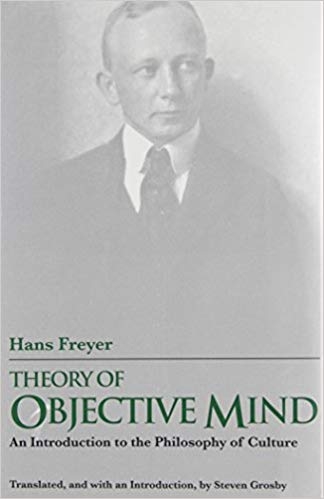 However, Freyer argued that the idea of historical (cultural) types and that cultures were the product of an essence which grew over time were already expressed in different forms long before Spengler in the works of Karl Lamprecht, Wilhelm Dilthey, and Hegel. It is also noteworthy that Freyer’s own sociology of cultural categories differed from Spengler’s morphology. In his earlier works, Freyer focused primarily on the nature of the cultures of particular peoples (Völker) rather than the broad High Cultures, whereas in his later works he stressed the interrelatedness of all the various European cultures across the millennia. Rejecting Spengler’s notion of cultures as being incommensurable, Freyer’s “history regarded modern Europe as composed of ‘layers’ of culture from the past, and Freyer was at pains to show that major historical cultures had grown by drawing upon the legacy of past cultures.”[14] Finally, rejecting Spengler’s historical determinism, Freyer had “warned his readers not to be ensnared by the powerful organic metaphors of the book [Der Untergang des Abendlandes] … The demands of the present and of the future could not be ‘deduced’ from insights into the patterns of culture … but were ultimately based on ‘the wager of action’ (das Wagnis der Tat).”[15]
Yet another important Conservative critique of Spengler was made by the Italian Perennial Traditionalist philosopher Julius Evola, who was himself influenced by the Conservative Revolution but developed a very distinct line of thought. In his The Path of Cinnabar, Evola showed appreciation for Spengler’s philosophy, particularly in regards to the criticism of the modern rationalist and mechanized Zivilisation of the “West” and with the complete rejection of the idea of progress.[16] Some scholars, such as H.T. Hansen, stress the influence of Spengler’s thought on Evola’s thought, but it is important to remember that Evola’s cultural views differed significantly from Spengler’s due to Evola’s focus on what he viewed as the shifting role of a metaphysical Perennial Tradition across history as opposed to historically determined cultures.[17]
In his critique, Evola pointed out that one of the major flaws in Spengler’s thought was that he “lacked any understanding of metaphysics and transcendence, which embody the essence of each genuine Kultur.”[18] Spengler could analyze the nature of Zivilisation very well, but his irreligious views caused him to have little understanding of the higher spiritual forces which deeply affected human life and the nature of cultures, without which one cannot clearly grasp the defining characteristic of Kultur. As Robert Steuckers has pointed out, Evola also found Spengler’s analysis of Classical and Eastern cultures to be very flawed, particularly as a result of the “irrationalist” philosophical influences on Spengler: “Evola thinks this vitalism leads Spengler to say ‘things that make one blush’ about Buddhism, Taoism, Stoicism, and Greco-Roman civilization (which, for Spengler, is merely a civilization of ‘corporeity’).”[19] Also problematic for Evola was “Spengler’s valorization of ‘Faustian man,’ a figure born in the Age of Discovery, the Renaissance and humanism; by this temporal determination, Faustian man is carried towards horizontality rather than towards verticality.”[20]
Finally, we must make a note of the more recent reception of Spenglerian philosophy in the European New Right and Identitarianism: Oswald Spengler’s works have been studied and critiqued by nearly all major New Right and Identitarian intellectuals, including especially Alain de Benoist, Dominique Venner, Pierre Krebs, Guillaume Faye, Julien Freund, and Tomislav Sunic. The New Right view of Spenglerian theory is unique, but is also very much reminiscent of Revolutionary Conservative critiques of Moeller van den Bruck and Hans Freyer. Like Spengler and many other thinkers, New Right intellectuals also critique the “ideology of progress,” although it is significant that, unlike Spengler, they do not do this to accept a notion of rigid cycles in history nor to reject the existence of any progress. Rather, the New Right critique aims to repudiate the unbalanced notion of linear and inevitable progress which depreciates all past culture in favor of the present, while still recognizing that some positive progress does exist, which it advocates reconciling with traditional culture to achieve a more balanced cultural order.[21] Furthermore, addressing Spengler’s historical determinism, Alain de Benoist has written that “from Eduard Spranger to Theodor W. Adorno, the principal reproach directed at Spengler evidently refers to his ‘fatalism’ and to his ‘determinism.’ The question is to know up to what point man is prisoner of his own history. Up to what point can one no longer change his course?”[22]
 Like their Revolutionary Conservative precursors, New Rightists reject any fatalist and determinist notion of history, and do not believe that any people is doomed to inevitable decline; “Decadence is therefore not an inescapable phenomenon, as Spengler wrongly thought,” wrote Pierre Krebs, echoing the thoughts of other authors.[23] While the New Rightists accept Spengler’s idea of Western decline, they have posed Europe and the West as two antagonistic entities. According to this new cultural philosophy, the genuine European culture is represented by numerous traditions rooted in the most ancient European cultures, and must be posed as incompatible with the modern “West,” which is the cultural emanation of early modern liberalism, egalitarianism, and individualism.
The New Right may agree with Spengler that the “West” is undergoing decline, “but this original pessimism does not overshadow the purpose of the New Right: The West has encountered the ultimate phase of decadence, consequently we must definitively break with the Western civilization and recover the memory of a Europe liberated from the egalitarianisms…”[24] Thus, from the Identitarian perspective, the “West” is identified as a globalist and universalist entity which had harmed the identities of European and non-European peoples alike. In the same way that Revolutionary Conservatives had called for Germans to assert the rights and identity of their people in their time period, New Rightists call for the overcoming of the liberal, cosmopolitan Western Civilization to reassert the more profound cultural and spiritual identity of Europeans, based on the “regeneration of history” and a reference to their multi-form and multi-millennial heritage.
Lucian Tudor
Notes
[1] An example of such an assertion regarding cultural pessimism can be seen in “Part III. Three Major Expressions of Neo-Conservatism” in Klemens von Klemperer, Germany’s New Conservatism: Its History and Dilemma in the Twentieth Century (Princeton: Princeton University Press, 1968).
[2] To supplement our short summary of Spenglerian philosophy, we would like to note that one the best overviews of Spengler’s philosophy in English is Stephen M. Borthwick, “Historian of the Future: An Introduction to Oswald Spengler’s Life and Works for the Curious Passer-by and the Interested Student,” Institute for Oswald Spengler Studies, 2011, <https://sites.google.com/site/spenglerinstitute/Biography>.
[3] Oswald Spengler, The Decline of the West Vol. 1: Form and Actuality (New York: Alfred A. Knopf, 1926), p. 106.
[4] Ibid.
[5] See “Prussianism and Socialism” in Oswald Spengler, Selected Essays (Chicago: Gateway/Henry Regnery, 1967).
[6] For a good overview of Moeller’s thought, see Lucian Tudor, “Arthur Moeller van den Bruck: The Man & His Thought,” Counter-Currents Publishing, 17 August 2012, <http://www.counter-currents.com/2012/08/arthur-moeller-van-den-bruck-the-man-and-his-thought/>.
[7] See Fritz Stern, The Politics of Cultural Despair (Berkeley & Los Angeles: University of California Press, 1974), pp. 238-239, and Alain de Benoist, “Arthur Moeller van den Bruck,” Elementos: Revista de Metapolítica para una Civilización Europea No. 15 (11 June 2011), p. 30, 40-42. <http://issuu.com/sebastianjlorenz/docs/elementos_n__15>.
[8] Arthur Moeller van den Bruck as quoted in Benoist, “Arthur Moeller van den Bruck,” p. 41.
[9] Ibid., p. 41.
[10] Ibid., pp. 41-43.
[11] See Fritz K. Ringer, The Decline of the German Mandarins: The German Academic Community, 1890–1933 (Hanover: University Press of New England, 1990), pp. 183 ff.; John J. Haag, Othmar Spann and the Politics of “Totality”: Corporatism in Theory and Practice (Ph.D. Thesis, Rice University, 1969), pp. 24-26, 78, 111.; Alexander Jacob’s introduction and “Part I: The Intellectual Foundations of Politics” in Edgar Julius Jung, The Rule of the Inferiour, Vol. 1 (Lewiston, New York: Edwin Mellon Press, 1995).
[12] For a brief introduction to Freyer’s philosophy, see Lucian Tudor, “Hans Freyer: The Quest for Collective Meaning,” Counter-Currents Publishing, 22 February 2013, <http://www.counter-currents.com/2013/02/hans-freyer-the-quest-for-collective-meaning/>.
[13] See Jerry Z. Muller, The Other God That Failed: Hans Freyer and the Deradicalization of German Conservatism (Princeton: Princeton University Press, 1987), pp. 78-79, 120-121.
[14] Ibid., p. 335.
[15] Ibid., p. 79.
[16] See Julius Evola, The Path of Cinnabar (London: Integral Tradition Publishing, 2009), pp. 203-204.
[17] See H.T. Hansen, “Julius Evola’s Political Endeavors,” in Julius Evola, Men Among the Ruins: Postwar Reflections of a Radical Traditionalist (Rochester: Inner Traditions, 2002), pp. 15-17.
[18] Evola, Path of Cinnabar, p. 204.
[19] Robert Steuckers, “Evola & Spengler”, Counter-Currents Publishing, 20 September 2010, <http://www.counter-currents.com/2010/09/evola-spengler/> .
[20] Ibid.
[21] In a description that applies as much to the New Right as to the Eurasianists, Alexander Dugin wrote of a vision in which “the formal opposition between tradition and modernity is removed… the realities superseded by the period of Enlightenment obtain a legitimate place – these are religion, ethnos, empire, cult, legend, etc. In the same time, a technological breakthrough, economical development, social fairness, labour liberation, etc. are taken from the Modern” (See Alexander Dugin, “Multipolarism as an Open Project,” Journal of Eurasian Affairs Vol. 1, No. 1 (September 2013), pp. 12-13).
[22] Alain de Benoist, “Oswald Spengler,” Elementos: Revista de Metapolítica para una Civilización Europea No. 10 (15 April 2011), p. 13.<http://issuu.com/sebastianjlorenz/docs/elementos_n__10>.
[23] Pierre Krebs, Fighting for the Essence (London: Arktos, 2012), p. 34.
[24] Sebastian J. Lorenz, “El Decadentismo Occidental, desde la Konservative Revolution a la Nouvelle Droite,”Elementos No. 10, p. 5.

 del.icio.us
 Digg
Digg Facebook

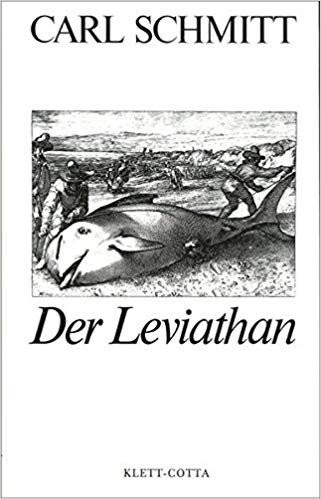 La théorie moderne de l’État
 Union européenne et Confédération d’États. De la guerre inter-étatique à la "guerre civile mondiale"
 Le "pluriversum" comme nouvel ordre planétaire
 Schmitt, en excluant toute conception universaliste du droit international parvient à la conclusion que l'ordre du monde ne peut se réaliser sans antagonismes entre les grands espaces, ou sans la domination d'un centre sur sa périphérie. Toutefois il reconnaît l'exigence d'une autorité supérieure, en mesure de trancher sur les différends et les tensions entre forces régulières et irrégulière, intérieures et extérieures. Il est incontestable que l’État moderne se distingue de tous les autres, pour avoir dompté, à l'intérieur de ses frontières, la relation ami-ennemi , sans l'avoir totalement supprimée.
 Ce dilemme et cette problématique rapprochent Schmitt et Kissinger, au delà de leur plaidoirie respective en faveur de l'Allemagne ou des Etats- Unis.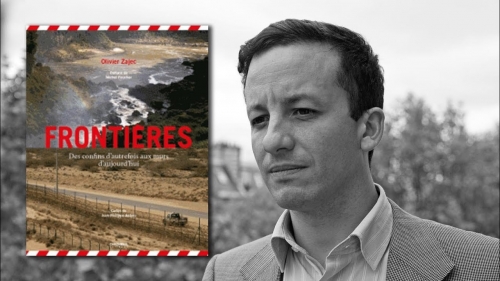
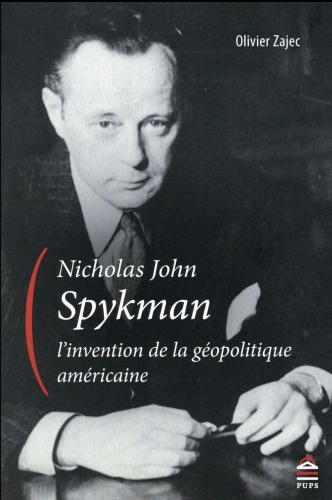 Spykman est un personnage assez fascinant. De nombreux auteurs de géographie politique le classent parmi les géopoliticiens « matérialistes », uniquement préoccupés de quantification des facteurs de force, en particulier militaires, et obnubilés par les déterminismes liés à la localisation des acteurs étatiques.
 L’interdépendance économique est certes une réalité. Elle l’était aussi à la veille de 1914.
 Dans son récent essai, L’affolement du monde, Thomas Gomart dit que nous vivons un moment « machiavélien », au sens où l’analyse des rapports de force, qui était passée au second plan à l’ère des grandes conférences sur le désarmement, reprend une importance fondamentale dès lors que les trois principales puissances, Etats-Unis, Russie et Chine, réarment comme jamais. Après avoir contribué à stabiliser le monde, ce que le général Gallois appelait « le pouvoir égalisateur de l’atome » est-il en train de devenir obsolète ?
 Du point de vue des apprentissages, la « géopolitique » n’y fera rien, ni l’économie, ni la « communication ».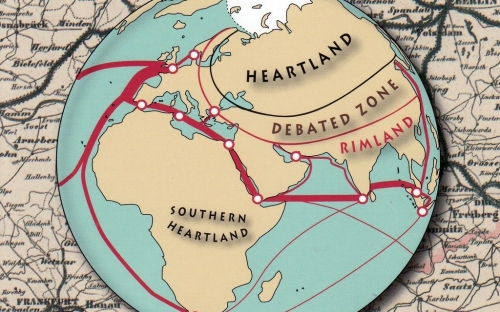
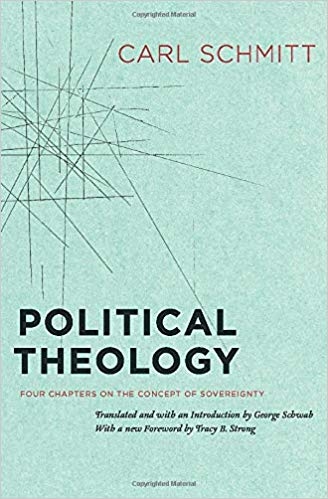 È un grande giurista del diritto pubblico e del diritto internazionale, che ha avuto il dono di un pensiero veramente radicale, e la sorte di vivere in un secolo di drammatici sconvolgimenti intellettuali, istituzionali e sociali. Ciò ne ha fatto anche un grande filosofo e un grande scienziato della politica; e lo ha esposto a grandi sfide e a grandi errori.
 Schmitt pensa – e lo spiega in tutta la sua produzione internazionalistica, dal 1926 al 1978 – che ogni universalismo e ogni negazione della originarietà del nemico siano un modo indiretto per far passare una inimicizia potentissima moralisticamente travestita, per generare guerre discriminatorie. Per ogni universalismo chi vi si oppone è un nemico non concreto e reale ma dell’umanità: un mostro da eliminare. Perché ci sia pace ci deve essere la possibilità concreta del nemico, non la sua criminalizzazione, secondo Schmitt.
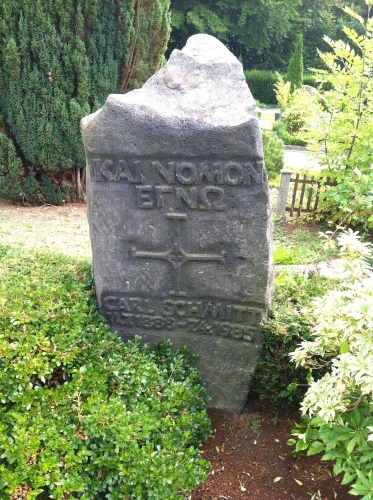 Carl Schmitt si è spento nel 1985 a Plettenberg in Westfalia alla veneranda età di 97 anni. Ciò significa che il suo sguardo non supera la «cortina di ferro» e si estende solo alla realtà della guerra fredda. Anche durante questo delicato periodo Schmitt ha continuato la sua attività di studioso e attento indagatore delle questioni di diritto internazionale dei suoi anni. Si espresse quindi sul dualismo USA-URSS, vedendo in esso una tensione verso l’unità del mondo nel segno della tecnica che avrebbe sancito l’egemonia universale di un «Unico padrone del mondo». Superando il 1989, e guardando al presente, possiamo dire che gli Stati Uniti dopo il ’91 hanno definitivamente preso scettro e globo in mano? L’American way of life è il futuro o il passato? Già Alexandre Kojève, per esempio, parlava di un nuovo attore politico e culturale e di una possibile «giapponizzazione dell’occidente».
 La grande questione dello Schmitt del secondo dopoguerra, concentrato su questioni di diritto internazionale, è l’urgenza di un «nuovo nomos della terra» che supplisca ai terribili sviluppi della dissoluzione dello jus publicum europaeum. Porsi il problema di un nuovo nomos significa considerare la terra come un tutto, un globo, e cercarne la suddivisione e l’ordinamento globali. Ciò sarebbe possibile solo trovando nuovi elementi di equilibrio tra le grandi potenze e superando le criminalizzazioni che hanno contraddistinto i conflitti bellici nel ’900. A scompaginare il vecchio bilanciamento tra terra e mare, di cui l’Inghilterra, potenza oceanica, si fece garante nel periodo dello jus publicum europaeum, si aggiunge, però, una nuova dimensione spaziale: l’aria. L’aria non è solo l’aereo, che sovverte le distinzioni «classiche» di «guerre en forme» terrestre e guerra di preda marittima, ma è anche lo spazio «fluido-gassoso» della Rete. Grazie ai nuovi sviluppi della politica nel mondo si rende sempre più evidente come l’era del digitale non apra solamente nuove possibilità (e nuovi problemi) per l’informazione e la comunicazione, ma si configuri, nella grande epopea degli uomini e della Terra, come l’ultima, grande, rivoluzione spaziale-globale. Come possono rispondere le categorie del nomos di Carl Schmitt al nuevo mundo del digitale?
 Dieses Buch enthält erstmals umfangreiche biografische Daten des Philoso-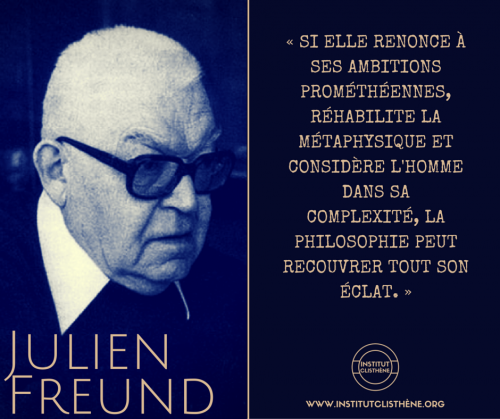
 Ainsi, la paix est un idéal, et en tant que telle, comme l’espérance d’Epiméthée, elle mérite nos efforts plus que nos ricanements. Il est juste que nous fassions tout pour faire advenir une paix lucide, sachant bien qu’elle ne parviendra jamais à réalisation. En ce sens, l’aspiration à la société cosmopolite est une aspiration morale naturelle à l’humanité, et vouloir récuser cette aspiration au nom de la permanence des conflits serait vouloir retirer à l’homme la moitié de sa condition. En revanche, prétendre atteindre la société cosmopolite comme un programme, à travers la politique, serait susciter un mélange préjudiciable de la morale et de la politique. Parce que nous sommes des créatures politiques, nous devons savoir que la paix universelle n’est qu’un idéal et non une possibilité de réalisation. Parce que nous sommes des créatures morales, nous ne pouvons nous contenter benoîtement des conflits sans espérer jamais les réduire au maximum. Le « règne des fins » ne doit pas aller jusqu’à constituer une eschatologie politique (qui existe aussi bien dans le libéralisme que dans le marxisme, et que l’on trouve au XIX° siècle jusque chez Proudhon), parce qu’alors il suscite une sorte de crase dommageable et irréaliste entre la politique et la morale. Mais l’espérance du bien ne constitue pas seulement une sorte d’exutoire pour un homme malheureux parce qu’englué dans les exigences triviales d’un monde conflictuel : elle engage l’humanité à avancer sans cesse vers son idéal, et par là à améliorer son monde dans le sens qui lui paraît le meilleur, même si elle ne parvient jamais à réalisation complète.


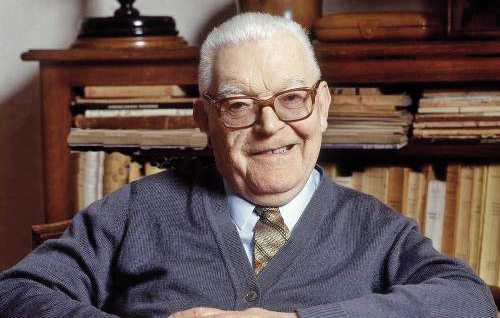
 D’abord instituteur pour pallier la disparition brutale de son père, le germanophone Julien Freund se retrouve otage des Allemands en juillet 1940 avant de poursuivre ses études à l’Université de Strasbourg repliée à Clermond-Ferrand. Il entre dès janvier 1941 en résistance dans le réseau Libération, puis dans les Groupes francs de combat de Jacques Renouvin. Arrêté en juin 1942, il est détenu dans la forteresse de Sisteron d’où il s’évade deux ans plus tard. Il rejoint alors un maquis FTP (Francs-tireurs et partisans) de la Drôme. Il y découvre l’endoctrinement communiste et la bassesse humaine.
 La politique se fait sur le terrain, et non dans les divagations spéculatives (p. 13). » Il relève dans son étude remarquable sur la notion de décadence que « si les civilisations ne se valent pas, c’est que chacune repose sur une hiérarchie des valeurs qui lui est propre et qui est la résultante d’options plus ou moins conscientes concernant les investissements capables de stimuler leur énergie. Cette hiérarchie conditionne donc l’originalité de chaque civilisation. Reniant leur passé, les Européens se sont laissés imposer, par leurs intellectuels, l’idée que leur civilisation n’était sous aucun rapport supérieure aux autres et même qu’ils devraient battre leur coulpe pour avoir inventé le capitalisme, l’impérialisme, la bombe thermonucléaire, etc. Une fausse interprétation de la notion de tolérance a largement contribué à cette culpabilisation. En effet, ni les idées, ni les valeurs ne sont tolérantes. Refusant de reconnaître leur originalité, les Européens n’adhèrent plus aux valeurs dont ils sont porteurs, de sorte qu’ils sont en train de perdre l’esprit de leur culture et le dynamisme qui en découle. Si encore ils ne faisaient que récuser leurs philosophies du passé, mais ils sont en train d’étouffer le sens de la philosophie qu’ils ont développée durant des siècles. La confusion des valeurs et la crise spirituelle qui en est la conséquence en sont le pitoyable témoignage. L’égalitarisme ambiant les conduit jusqu’à oublier que la hiérarchie est consubstantielle à l’idée même de valeur (p. 364) ».
 Hazony defines the nation-state in contradistinction to two alternatives: tribal anarchy and imperialism. Tribal anarchy is basically a condition of more or less perpetual suspicion, injustice, and conflict that exists between tribes of the same nation in the absence of a common government. Imperialism is an attempt to extend common government to the different nations of the world, which exist in a state of anarchy vis-à-vis each other.
 Hazony argues that nationalism has a number of advantages over tribal anarchy. The small states of ancient Greece, medieval Italy, and modern Germany wasted a great deal of blood and wealth in conflicts that were almost literally fratricidal, and that made these peoples vulnerable to aggression from entirely different peoples. Unifying warring “tribes” of the same peoples under a nation-state created peace and prosperity within their borders and presented a united front to potential enemies from without.
 The “mutual loyalty” at the heart of nation-states is a product of a common ethnicity. How does ethnic unity make free institutions possible? Every society needs order. Order either comes from within the individual or is imposed from without. A society in which individuals share a strong normative culture does not need a heavy-handed state to impose social order.
 In fact, Hazony argues, imperialism is far more conducive to hatred and violence than nationalism.
 The third principle is “government monopoly of organized force within the state” (p. 177), as opposed to tribal anarchy. A failed state is one in which different ethnic groups create their own militias.
 The difference between good nationalism and bad nationalism is simple: Good nationalism is universalist. A good nationalist wants to ensure the sovereignty of his own people, but does not wish to deny the sovereignty of other peoples. Instead, he envisions a global order of sovereign nations, to the extent that this is possible. Hazony, however, wishes to stop short of the idea of a universal right to self-determination, which I will deal with at greater length later.


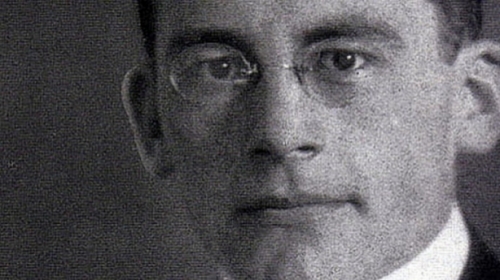
 De l’œuvre proprement juridique du jeune Carl Schmitt, disons de celle d’avant 1933, nous possédons en français Théorie de la constitution (1928, PUF 1993), La valeur de l’État et la signification de l’individu (1914, Droz 2003), mais il nous manquait jusqu’aujourd’hui un petit ouvrage de 1912 intitulé Loi et jugement, qu’Olivier Beaud, dans sa préface à l’édition française de Théorie de la constitution, qualifie de « véritable recherche de théorie du droit abordant les questions les plus fondamentales ».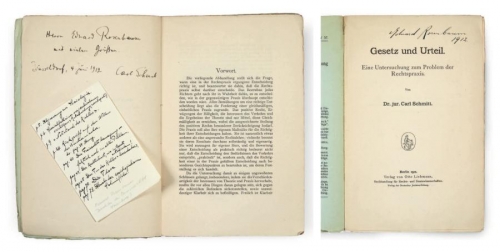

 La seconde raison de la défaite perpétuelle de la droite, c’est son conservatisme. Les réaco-conservateurs assimilent trop souvent l’avenir à un déploiement inéluctable des forces progressistes. Ils en viennent à prendre l’objet (l’avenir) façonné par le sujet (la gauche) pour le sujet lui-même. Le futur étant devenu synonyme d’avancées « progressistes », l’unique remède ne pourrait être que son contraire – le passé – plutôt qu’un avenir alternatif. Or il y a là une forme de défaitisme, comme si la droite assimilait sa propre déconfiture, ratifiant le monopole de la gauche sur l’avenir. Puisque l’Histoire n’est qu’une longue série de victoires progressistes, c’est l’avenir lui-même qu’il faudrait brider, plutôt que les acteurs qui le façonnent. Ralentir le temps et sanctuariser certaines institutions apparaît alors comme la solution par défaut.
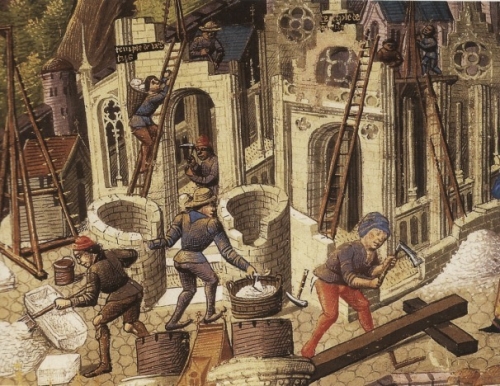
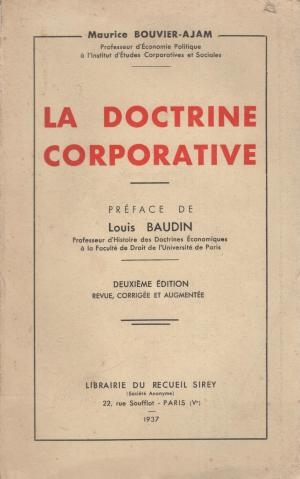 Les organisations professionnelles sont composées de représentants élus et de véritables experts désignés par l’État : elles renferment, en proportions à déterminer par une loi, des chefs d’entreprise, des cadres, des employés et des ouvriers, de l’industrie et de l’artisanat, de l’agriculture, de la pêche et des transports, des professions libérales et d’employés de l’État. Elles ont pour rôles de régler les conditions de travail et de rémunération, d’organiser la formation initiale des apprentis et la formation continue des travailleurs, voire de présider au regroupement des petites entreprises pour en accroître la rentabilité, économiser des matières premières et standardiser la production (Dauphin-Meunier, 1941 ; Denis, 1941 ; Bouvier-Ajam, 1943). C’est un régime particulièrement adapté à la gestion des crises économiques et sociales.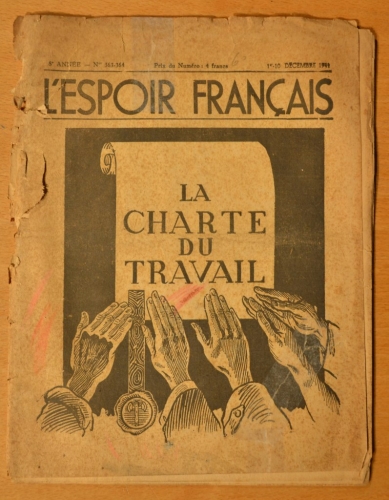
 L’économie corporatiste fut la solution adoptée par les populistes du XXe siècle. Comme l’a très justement écrit Hilaire Belloc (in L’État servile, de 1912) : « Le contrôle de la production des richesses revient, en définitive, à contrôler la vie humaine ».
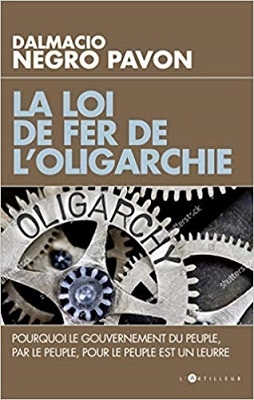 Sourcé et documenté, mais en même temps décapant sans concessions et affranchi de tous les conventionnalismes, ce livre atypique sort résolument des sentiers battus de l’histoire des idées politiques. Son auteur, Dalmacio Negro Pavón, politologue renommé dans le monde hispanique, est au nombre de ceux qui incarnent le mieux la tradition académique européenne, celle d’une époque où le politiquement correct n’avait pas encore fait ses ravages, et où la majorité des universitaires adhéraient avec conviction, – et non par opportunisme comme si souvent aujourd’hui -, aux valeurs scientifiques de rigueur, de probité et d’intégrité. Que nous dit-il ? Résumons-le en puisant largement dans ses analyses, ses propos et ses termes:
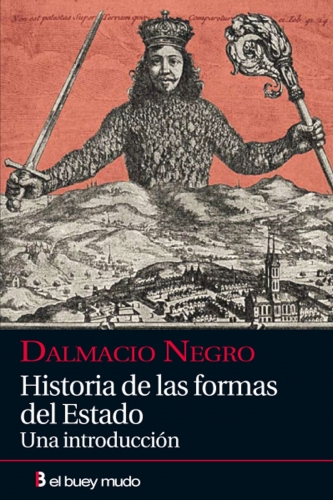 Une révolution a besoin de dirigeants, mais l’étatisme a infantilisé la conscience des Européens. Celle-ci a subi une telle contagion que l’émergence de véritables dirigeants est devenue quasiment impossible et que lorsqu’elle se produit, la méfiance empêche de les suivre. Mieux vaut donc, une fois parvenu à ce stade, faire confiance au hasard, à l’ennui ou à l’humour, autant de forces historiques majeures, auxquelles on n’accorde pas suffisamment d’attention parce qu’elles sont cachées derrière le paravent de l’enthousiasme progressiste.
 Le réaliste authentique affirme que la finalité propre à la politique est le bien commun, mais il reconnait la nécessité vitale des finalités non politiques(le bonheur et la justice). La politique est selon lui au service de l’homme. La mission de la politique n’est pas de changer l’homme ou de le rendre meilleur (ce qui est le chemin des totalitarismes), mais d’organiser les conditions de la coexistence humaine, de mettre en forme la collectivité, d’assurer la concorde intérieure et la sécurité extérieure. Voilà pourquoi les conflits doivent être, selon lui, canalisés, réglementés, institutionnalisés et autant que possible résolus sans violence.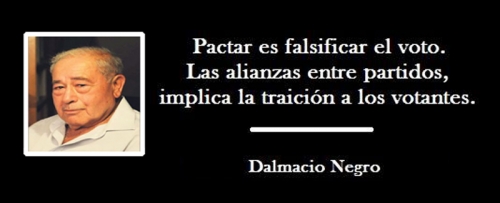
 Cela étant, on peut être un sceptique ou un pessimiste lucide mais refuser pour autant de désespérer. On ne peut pas éliminer les oligarchies. Soit ! Mais, comme nous le dit Dalmacio Negro Pavón, il y a des régimes politiques qui sont plus ou moins capables d’en mitiger les effets et de les contrôler. Le nœud de la question est d’empêcher que les détenteurs du pouvoir ne soient que de simples courroies de transmission des intérêts, des désirs et des sentiments de l’oligarchie politique, sociale, économique et culturelle. Les hommes craignent toujours le pouvoir auquel ils sont soumis, mais le pouvoir qui les soumet craint lui aussi toujours la collectivité sur laquelle il règne. Et il existe une condition essentielle pour que la démocratie politique soit possible et que sa corruption devienne beaucoup plus difficile sinon impossible, souligne encore Dalmacio Negro Pavón. Il faut que l’attitude à l’égard du gouvernement soit toujours méfiante, même lorsqu’il s’agit d’amis ou de personnes pour lesquelles on a voté. Bertrand de Jouvenel disait à ce propos très justement: « le gouvernement des amis est la manière barbare de gouverner ».
 La publicité est évidemment toujours sous le soupçon. Dans un livre qui avait fait du bruit à l'époque, "la persuasion cachée" de 1957, Vance Packard révélait les stratégies des compagnies publicitaires qui truffaient leurs annonces de textes et images supposés agir sur nos motivations cachées en échappant à la censure du Moi.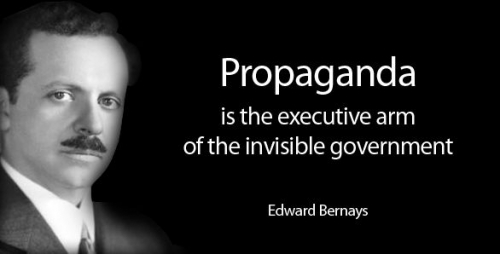
 Mais que pensait vraiment Freud ?
 Polymnia Athanassiadi, professeur d’histoire ancienne à l’Université d’Athènes, spécialiste du platonisme tardif (le néoplatonisme) avait bousculé quelques certitudes, dans son ouvrage publié en 2006, « la lutte pour l’orthodoxie dans le platonisme tardif », en montrant que les structures de pensée dans l’Empire gréco-romain, dont l’aboutissement serait la suppression de toute possibilité discursive au sein de l’élite intellectuelle, étaient analogues chez les philosophes « païens » et les théologiens chrétiens. Cette osmose, à laquelle il était impossible d’échapper, se retrouve au niveau des structures politiques et administratives, avant et après Constantin. L’État « païen », selon Mme Athanassiadi, prépare l’État chrétien, et le contrôle total de la société, des corps et des esprits. C’est la thèse contenue dans une étude éditée en 2010, Vers la pensée unique. La montée de l’intolérance dans l’Antiquité tardive.
 Polymnia Athanassiadi rappelle les influences qui ont pu marquer cette conception positive : elle a été élaborée durant une époque où la détente d’après-guerre devenait possible, où l’individualisme se répandait, avec l’hédonisme qui l’accompagne inévitablement, où le pacifisme devient, à la fin années soixante, la pensée obligée de l’élite. De ce fait, les conflits sont minimisés.

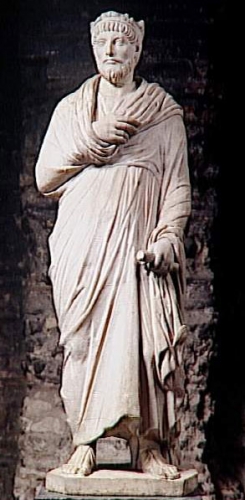 Notons que Julien, le restaurateur du paganisme d’État, est mis sur le même plan que Constantin et que ses successeurs chrétien. En voulant créer une « Église païenne », en se mêlant de théologie, en édictant des règles de piété et de moralité, en excluant épicuriens, sceptiques et cyniques, il a consolidé la cohérence théologico-autoritaire de l’Empire. Il assumait de ce fait la charge sacrale dont l’empereur était dépositaire, singulièrement la dynastie dont il était l’héritier et le continuateur. Il avait conscience d’appartenir à une famille, fondée par Claude le Gothique (268 – 270), selon lui dépositaire d’une mission de jonction entre l’ici-bas et le divin.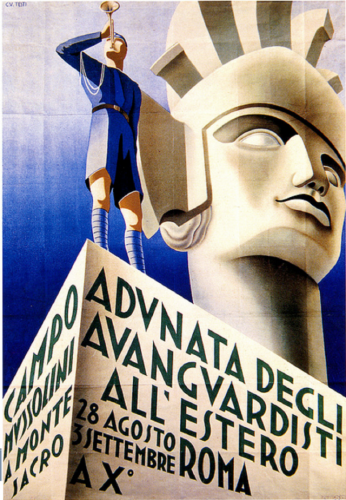
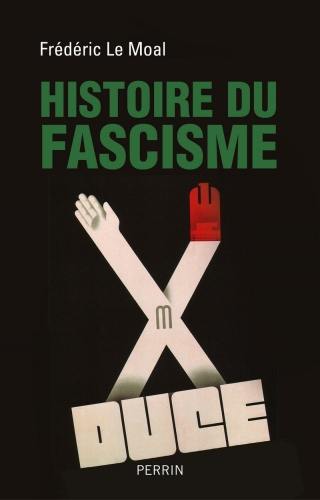 La thèse n’est pas nouvelle. En 1984, le Club de l’Horloge sortait chez Albin Michel Socialisme et fascisme : une même famille ?. Ne connaissant pas ce livre, Frédéric Le Moal arrive néanmoins aux mêmes conclusions. Il se cantonne toutefois à la seule Italie en oubliant ses interactions européennes, voire extra-européennes (le péronisme en Argentine). Il circonscrit le fascisme en phénomène italien spécifique. Certes, il mentionne l’influence d’Oswald Spengler sur Mussolini, mais il en oublie le contexte international, à savoir l’existence protéiforme d’une révolution conservatrice non-conformiste. En outre, l’auteur ne souscrit pas à la thèse de Zeev Sternhell pour qui le fascisme italien a eu une matrice française.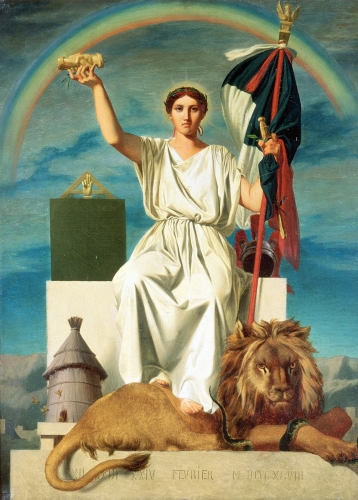

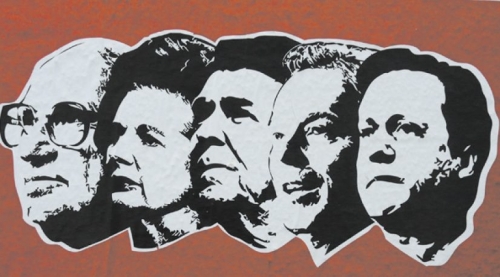
 Pourtant, la question du conservatisme est complexe car le terme, lui-même, renvoie à des phénomènes – et des réalités – politiques différents, du parti conservateur britannique (les Tories, au pouvoir au Royaume-Uni en alternance démocratique avec le Labour travailliste) au monolithique ancien Parti communiste soviétique (PCUS), dont les caciques étaient qualifiés de « conservateurs », sans doute en partie en raison de leur âge… Une seule chose est sûre, l’absence pérenne – ou presque (l’exception Fillon vaincue par le très progressiste hebdomadaire Le Canard enchaîné) – du terme dans le débat français, depuis la fin de la Révolution française au moins jusqu’à récemment (puisque l’on parle de néo-conservateurs que la gauche morale n’hésite pas, d’ailleurs, à qualifier de « néo-cons » – le discrédit sémantique est toujours au cœur des débats et fonctionne d’ailleurs, mais s’agissant de cette tendance, il s’agit, le plus souvent, de « libéraux américains » – donc, la gauche américaine issue des démocrates – défendant des thèses conservatrices liées à la défense de la nation : identités fédérées réaffirmées, rejet du « politically correct », rejet du fiscalisme…).
 En effet, originellement, l’esprit conservateur est de nature collective : il vise à préserver un ordre naturel préexistant alors que le libéralisme post-révolutionnaire naît du développement des besoins exprimés individuellement. Le conservatisme ne nie pas la liberté mais se rattache davantage à la liberté concrète, plus qu’abstraite, à la liberté collective, plus qu’individuelle. Le triomphe de l’individualisme, état suprême du libéralisme, s’oppose au conservatisme des systèmes normatifs. C’est ici, à mon sens, que le renouveau du conservatisme prend tout son sens : le développement de l’individualisme a contribué à l’effacement des repères collectifs, identitaires, religieux ou culturels. La fin du bien commun a rendu la modernité, expression d’un libéralisme fondé sur l’individu, exécrable pour les « oubliés » du Système. L’extension des droits individuels comme le droit à l’enfant, exalté par les « progressistes », vient à exclure ce bien commun qu’est le droit de l’enfant à vivre au sein d’une famille. Alexandre Soljenitsyne dénonçait déjà, en 1978, dans Le déclin du courage, le matérialisme occidental issu de la société de consommation. Le déracinement, fruit de ce conservatisme anglo-saxon, a touché d’abord les classes populaires souvent qualifiées d’« oubliées » par nos chercheurs sociologues. La France des oubliés, c’est d’abord l’expression d’une société qui a fait de l’individualisme libéral son étalon, son exigence. Or, le conservatisme, forme d’enracinement, aurait pu, pourrait, peut encore venir tempérer ce système économique certes nécessaire mais qui doit constituer un des piliers d’une société tridimensionnelle et non le pilier central.


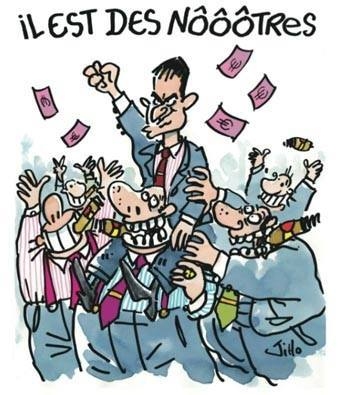


 « Pour une évidente clarté sémantique, écrit-il, il serait préférable de laisser au Flamby normal, à l’exquise Najat Vallaud-Belkacem et aux morts vivants du siège vendu, rue de Solférino, ce mot de socialiste et d’en trouver un autre plus pertinent. Sachant que travaillisme risquerait de susciter les mêmes confusions lexicales, les termes de solidarisme ou, pourquoi pas, celui de justicialisme, directement venu de l’Argentine péronisme, seraient bien plus appropriés. »